Welcome to the Mathematical World!
Vladimir Arnold (1937 – 2010)
Pioneer of Dynamical Systems and Catastrophe Theory
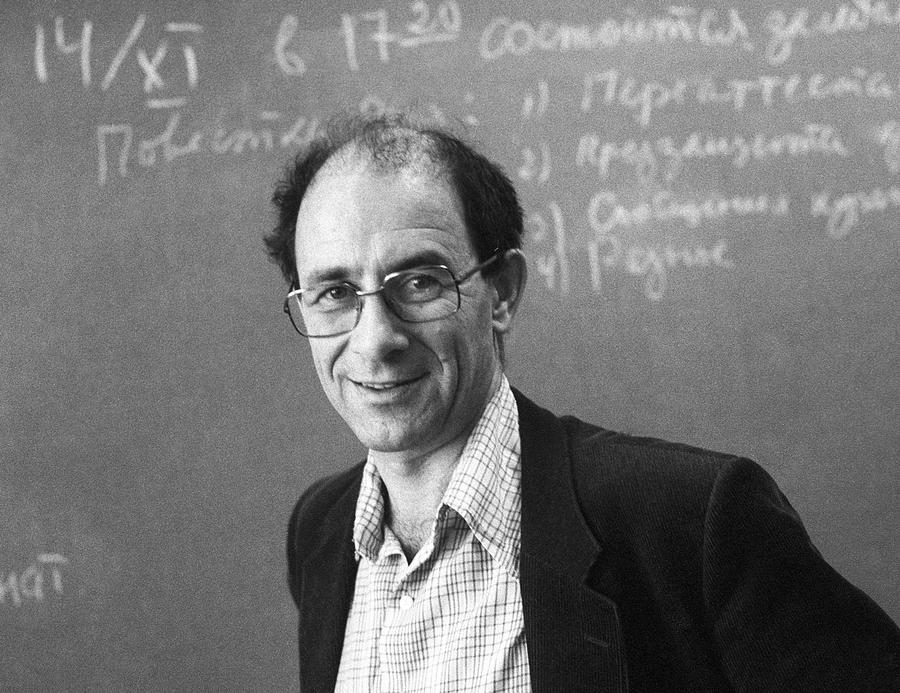
Vladimir Igorevich Arnold was a brilliant Russian mathematician known for his groundbreaking contributions to dynamical systems, topology, singularity theory, and catastrophe theory. Born in Moscow, Arnold displayed extraordinary mathematical talent from a young age and studied at Moscow State University, where he became a leading figure in the world of pure and applied mathematics.
Major Contributions
Arnold’s early work on the KAM theorem (Kolmogorov–Arnold–Moser theorem) revolutionized the study of dynamical systems and celestial mechanics. His ideas provided profound insights into the stability of planetary orbits and the behavior of complex systems.
- KAM Theorem: Stability of Hamiltonian systems under small perturbations.
- Singularity Theory: Advanced classification of critical points and bifurcations.
- Catastrophe Theory: Helped explain sudden changes in physical and biological systems.
Influence in Mathematics
Arnold had a gift for making complex ideas intuitive and accessible. He wrote several influential books that bridged geometry, analysis, and physics, inspiring generations of students worldwide.
Legacy
Arnold’s deep and broad work connected seemingly unrelated fields, leaving an indelible mark on mathematics and applied sciences. His legacy endures in everything from celestial mechanics to modern chaos theory.
Facts
- Student of Andrey Kolmogorov.
- Known for clarity and elegance in expository writing.
- Received the Wolf Prize in Mathematics in 2001.

All rights reserved by the Mathematical Unity
Contact: +8801400044645
Email: mathematicalhorse1453@gmail.com
Our Discord Server: Mathematical Unity [Ulus Riyadiyat]